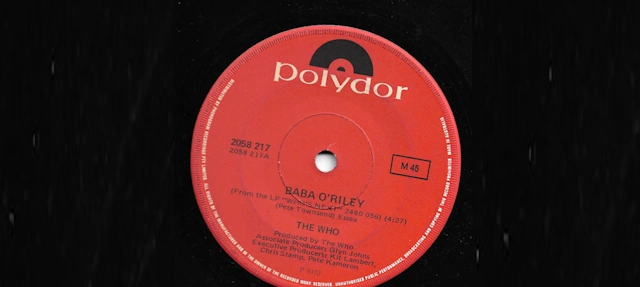
Love Me Do brings you the story of The Who’s song Baba O’Riley, written by Pete Townshend as the opening track for the Who’s Next LP and a stage favourite.
 Baba O’Riley by The Who is an iconic rock anthem known for its electrifying opening synthesizer riff. But there’s a fascinating story behind the song and its title.
The title Baba O’Riley is a combination of two significant influences on Pete Townshend, the group’s guitarist and primary songwriter:

1. Meher Baba: An Indian spiritual master who had a profound impact on Townshend’s life and spiritual journey.
Meher Baba, born Merwan Sheriar Irani on February 25, 1894, in Pune, India, was a renowned Indian spiritual master. He claimed to be the Avatar, or God in human form, of his age. His teachings emphasized the realization of one’s own divinity and the absolute oneness of God.
Here are some key points about Meher Baba:
– Spiritual Transformation: At the age of 19, Meher Baba had encounters with five spiritual figures known as Perfect Masters, which led to his spiritual awakening.
– Silence: In 1925, he began a 44-year period of silence, communicating first with an alphabet board and later through hand gestures.
– Teachings: His teachings combined elements of Sufi, Vedic, and Yogic traditions. He believed that the universe is an illusion and that the goal of life is to awaken to one’s own divinity.
– Service: Meher Baba established Meherabad, a center for spiritual training, a free school, hospital, and shelters for the poor.
– Legacy: His teachings continue to influence many, including musicians like Pete Townshend and Melanie Safka.
And…
2. Terry Riley: An avant-garde composer whose minimalist music style inspired the song’s distinctive keyboard riff.
Terry Riley is an influential American composer, born on June 24, 1935, in Colfax, California. He is widely recognized as a pioneer of the minimalist music movement. Here are some key highlights about his life and work:
– Minimalism: Riley is best known for his groundbreaking composition In C (1964), which is considered a landmark in minimalist music. The piece consists of 53 short, melodic phrases played in sequence by any number of instruments, creating a mesmerizing, evolving soundscape.
– Innovative Techniques: Riley’s work often incorporates repetition, tape music techniques, improvisation, and delay systems. His compositions are known for their hypnotic, trance-like qualities.
– Jazz and Indian Influence: Riley’s music is heavily influenced by jazz and Indian classical music. He studied under the Hindustani singer Pandit Pran Nath and frequently incorporated elements of Indian music, such as raga, into his compositions.
– Collaborations: Throughout his career, Riley has collaborated with many notable musicians and ensembles, including the Kronos Quartet and his son, guitarist Gyan Riley.
– Notable Works: Besides In C, Riley’s other significant works include A Rainbow in Curved Air (1969), Persian Surgery Dervishes (1972), and Shri Camel (1980).
Riley’s innovative approach to composition has had a lasting impact on experimental music, rock, and contemporary electronic music. His work continues to inspire musicians and composers around the world.
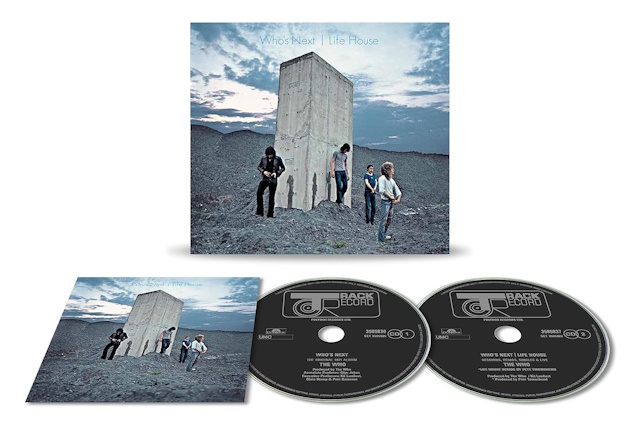
The lyrics of Baba O’Riley are often interpreted as a reflection on the disillusionment of the post-World War II generation. The line Teenage Wasteland became emblematic of the feeling of alienation and societal disconnection experienced by many young people in the 1970s.
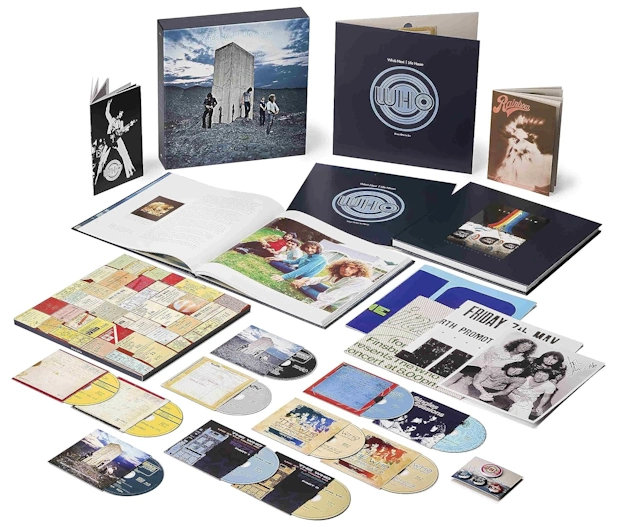
Interestingly, the song was originally intended to be part of a larger rock opera called Life House, which was an ambitious project envisioned by Townshend. Life House was meant to be a multi-media project involving music, film, and live performances, exploring the themes of individuality and societal control. However, the project was ultimately abandoned, and some of the songs, including Baba O’Riley, were instead featured on the album Who’s Next.
RECENT POSTS
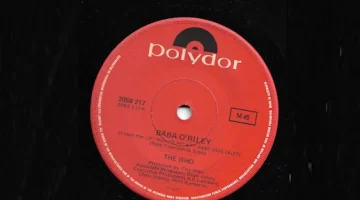
Baba O’Riley
Love Me Do brings you the story of The Who’s song Baba O’Riley, written by Pete Townshend as the opening track for the Who’s Next LP and a stage favourite.
Book Review: Photograph by Ringo Starr
Love Me Do’s review of Photograph by Ringo Starr, a collection of photography by The Beatles’ legendary drummer who was indeed a talented photographer.
Book Review: Charlie’s Good Tonight
Love Me Do reviews Charlie’s Good Tonight by Paul Sexton, the official biography of Rolling Stones drummer Charlie Watts.
The Songs: Love Me Do
Love Me Do tells the story of the song Love Me Do, the Beatles first single which launched a music revolution leading to the British Invasion of the USA.
Book Review: Another Day in the Life by Ringo Starr
Love Me Do reviews the book Another Day in the Life by Ringo Starr, showing his life in the Beatles and afterwards, & showcasing his skills as a photographer.
The Songs: Come On
Love Me Do tells the story of Come On, the song written by Chuck Berry and later recorded by The Rolling Stones as their first single release.
Bio: Ronnie Wood
Love Me Do brings you a brief bio of Ronnie Wood, from his time with The Faces to The Rolling Stones, and his artwork and personal life.
Bio: Mick Jagger
Love Me Do provides a brief profile of Mick Jagger of the Rolling Stones from his early life through his rise to fame and to his musical legacy and honours.
Bio: Keith Richards
Love Me Do tells the story of Keith Richards of the Rolling Stones from his early life through his rise to fame to his musical legacy and honours.