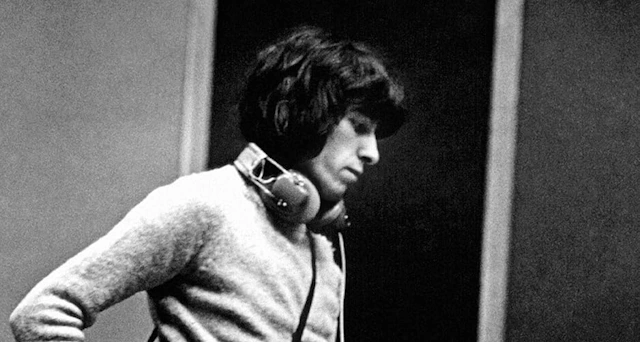
Love Me Do presents a brief look at the life of the multi-talented Brian Jones, founder of The Rolling Stones who died cruelly young at the age of 27.

Brian Jones, born Lewis Brian Hopkin Jones on February 28, 1942, in Cheltenham, Gloucestershire, England, was a visionary musician, multi-instrumentalist, and the original founder of The Rolling Stones.
Though his time in the spotlight was tragically cut short, Jones’s influence on the band’s early sound and the broader landscape of rock and roll remains indelible. His life was a blend of extraordinary talent, relentless creativity, and personal turmoil, making him one of the most enigmatic figures in music history.
Brian Jones: Early Years
From a young age, Jones exhibited a deep passion for music. His parents, Lewis and Louisa Jones, were both musically inclined, and Brian quickly took to the piano and clarinet before discovering the guitar. A bright but rebellious student, he struggled with authority and formal education, often clashing with his parents over his unconventional lifestyle.
By his late teens, Jones had become enamored with blues music, particularly the works of American legends like Muddy Waters, Howlin’ Wolf, Bo Diddley, and Robert Johnson. This passion for the blues would later define his contributions to The Rolling Stones.
The Beginnings of The Rolling Stones
In 1962, Jones moved to London, where he began to immerse himself in the city’s burgeoning blues scene. It was here that he placed an advertisement in Jazz News seeking musicians to form a rhythm and blues group. Among the respondents were Mick Jagger and Keith Richards, two young enthusiasts who shared Jones’s love for American blues.
Before forming the Stones Jones played blues with a young singer named Paul Pond – who later became Paul Jones of Manfred Mann.
Together, they formed the core of what would become The Rolling Stones, with Jones initially serving as the band’s leader and primary creative force. His vision for the group was clear: to bring authentic blues music to a British audience. He was also tireless in getting gigs for the group.
 Jones’s musical versatility was unparalleled. In addition to guitar, he mastered a wide array of instruments, including the harmonica, sitar, marimba, and dulcimer, which he incorporated into the band’s early recordings.
His innovative use of these instruments helped shape the Stones’ distinctive sound on tracks like Paint It Black (sitar), Under My Thumb (marimba), and Ruby Tuesday (recorder). Jones’s flair for experimentation and his ability to blend diverse musical styles made him a pivotal figure in the band’s evolution.
Tensions Surface
However, as The Rolling Stones rose to fame, tensions within the group began to surface. Jones’s leadership role gradually diminished as Jagger and Richards took over as the band’s primary songwriters and public faces. Jones’s struggles with substance abuse and his increasingly erratic behavior further alienated him from the group.
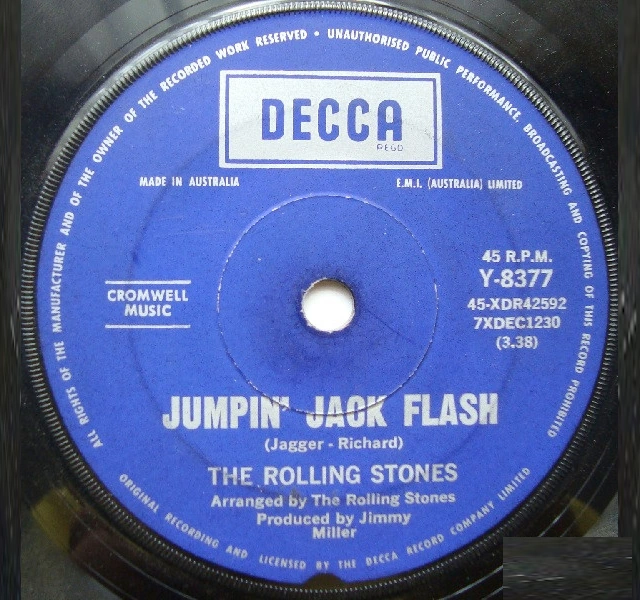
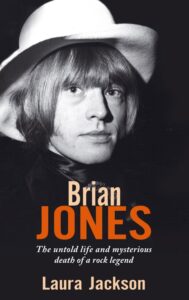
By 1969, his contributions to the band had waned, and he was officially asked to leave The Rolling Stones on June 8, 1969. Some people say that he frequently didn’t turn up for recording sessions, and when he did he was unable to play and the rest of the band relegated him to playing the tambourine. However, less than a year before his death he was a major influence on their classic LP, Beggar’s Banquet, and the single recorded at the same sessions, Jumpin’ Jack Flash. Laura Jackson’s biography of Brian Jones shows a far more sympathetic portrait of Jones than other books so.
The Tragic Death of Brian Jones
Tragically, just weeks after his departure, Brian Jones was found dead at the age of 27 in the swimming pool of his home in Hartfield, East Sussex, on July 3, 1969. The circumstances surrounding his death remain a subject of speculation and mystery. A late-night swim in his swimming pool led to him drowning. Some speculation remains about whether there was someone else with him, who caused his death either accidentally or deliberately. There is also a theory – supported by two of Jones’s own children – that he was murdered, possibly due to a dispute over money with a local builder, who was the last person to see him alive. The official cause of death was ‘death by misadventure’.
The Legacy of Brian Jones
Despite his untimely demise, Brian Jones’s legacy endures. He was a pioneer who helped bridge the gap between American blues and British rock, laying the foundation for one of the greatest bands in history. His innovative spirit and boundless creativity continue to inspire musicians and fans alike, ensuring that his contributions to music will never be forgotten.
Brian Jones’s personal life was as tumultuous and complex as his career, marked by numerous relationships, fathering several children, and a lifestyle that often reflected the excesses of the 1960s rock ‘n’ roll scene. His charm, good looks, and magnetic personality attracted many women, but his relationships were often short-lived and fraught with drama.
Don’t miss my review of The Rolling Stones: The Brian Jones Years.
Brian Jones’s Key Relationships and Children
1. Patricia Andrews
One of Jones’s earliest significant relationships was with Patricia Pat Andrews, a young woman he met in Cheltenham. They had a son together, Julian Mark Andrews, born in 1961. Jones was only 19 at the time and struggled with the responsibilities of fatherhood. He provided little financial or emotional support to Pat and Julian, and their relationship quickly dissolved. Julian later spoke about the challenges of growing up without his father’s presence, though he eventually reconnected with Jones’s family later in life.
As a schoolboy, Jones had previously had a child with a 14-year-old schoolgirl, the child being given up for adoption.
2. Linda Lawrence
Linda Lawrence was another important figure in Jones’s life. They met in 1963, and she became pregnant with his second child, Julian Brian Lawrence, born in 1964. As with Pat Andrews, Jones was largely absent as a father, and Linda eventually moved to the United States, where she married musician Donovan.
Donovan helped raise Julian Brian, who later became a musician himself, performing under the name Julian Jones. Linda remained a significant figure in Jones’s life, and he reportedly expressed regret about not being a better father to their son.
3. Anita Pallenberg
Anita Pallenberg, a German-Italian model and actress, was one of Jones’s most high-profile relationships. They began dating in 1965, and Pallenberg became deeply involved in the Rolling Stones’ inner circle. However, their relationship was volatile, marked by Jones’s jealousy, controlling behavior, and substance abuse.
Pallenberg eventually left Jones for Keith Richards, which further strained the already tense dynamic within the band. Despite the breakup, Pallenberg remained a significant figure in the Stones’ world.
4. Suki Potier
Suki Potier, a model and socialite, was another of Jones’s girlfriends during the mid-1960s. Their relationship was less tumultuous than some of his others, but it was still overshadowed by Jones’s erratic behavior and drug use. Potier later survived a car crash that claimed the life of Tara Browne, a close friend of Jones and the inspiration for The Beatles’ song A Day in the Life.
5. Anna Wohlin
At the time of his death, Jones was in a relationship with Anna Wohlin, a Swedish model. Wohlin was living with Jones at his home, Cotchford Farm, in East Sussex, and was present on the night he died. She later wrote a memoir, The Murder of Brian Jones, in which she claimed that Jones’s death was not an accident but the result of foul play. Her account remains controversial and has fueled decades of speculation about the circumstances surrounding Jones’s death.
Legacy of His Relationships
Brian Jones fathered at least five children, though he acknowledged only two during his lifetime. His inability to maintain stable relationships and his neglect of his children were reflective of his chaotic lifestyle and struggles with fame, substance abuse, and mental health. Despite his shortcomings as a partner and father, Jones’s children have worked to understand and honor his legacy, with some, like Julian Brian Lawrence, pursuing careers in music as a way to connect with their father’s artistic spirit.
Jones’s relationships were a testament to his charisma and magnetism, but they also revealed the darker side of his personality—his insecurities, jealousy, and self-destructive tendencies. These complexities have made him a fascinating and tragic figure in rock history, remembered not only for his musical genius but also for the personal struggles that defined his life.
RECENT POSTS
The Songs: Jumpin’ Jack Flash
Love Me Do tells the story of the Rolling Stones’ song Jumpin’ Jack Flash, one of their greatest 60s hits and still a stage favourite today.
The Songs: From Me to You
Love Me Do tells the story of the Beatles third single, From Me to You, which was their first to reach Number One in the UK pop charts.

Bio: Brian Jones
Love Me Do presents a brief look at the life of the multi-talented Brian Jones, founder of The Rolling Stones who died cruelly young at the age of 27.
The Songs: Baba O’Riley
Love Me Do brings you the story of The Who’s song Baba O’Riley, written by Pete Townshend as the opening track for the Who’s Next LP and a stage favourite.
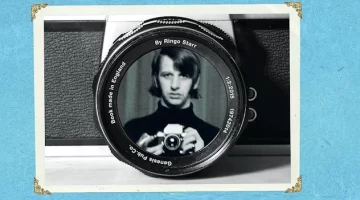
Book Review: Photograph by Ringo Starr
Love Me Do’s review of Photograph by Ringo Starr, a collection of photography by The Beatles’ legendary drummer who was indeed a talented photographer.
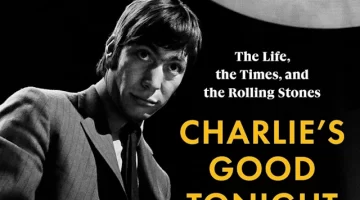
Book Review: Charlie’s Good Tonight
Love Me Do reviews Charlie’s Good Tonight by Paul Sexton, the official biography of Rolling Stones drummer Charlie Watts.
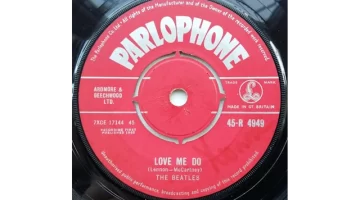
The Songs: Love Me Do
Love Me Do tells the story of the song Love Me Do, the Beatles first single which launched a music revolution leading to the British Invasion of the USA.
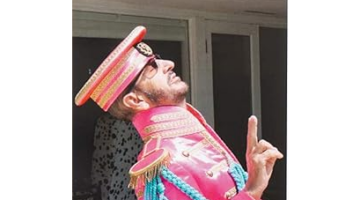
Book Review: Another Day in the Life by Ringo Starr
Love Me Do reviews the book Another Day in the Life by Ringo Starr, showing his life in the Beatles and afterwards, & showcasing his skills as a photographer.
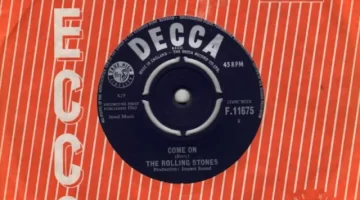
The Songs: Come On
Love Me Do tells the story of Come On, the song written by Chuck Berry and later recorded by The Rolling Stones as their first single release.